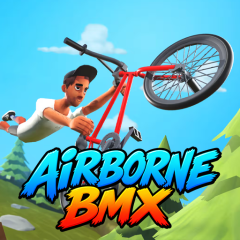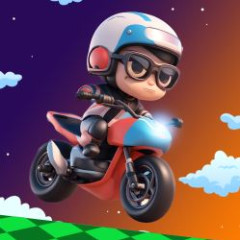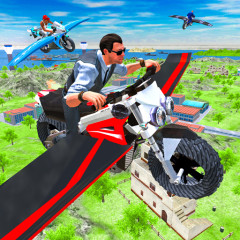
Conquer challenging terrain and steep slopes on your bike in Airborne BMX. This BMX game will put your handling skills to the ultimate test.
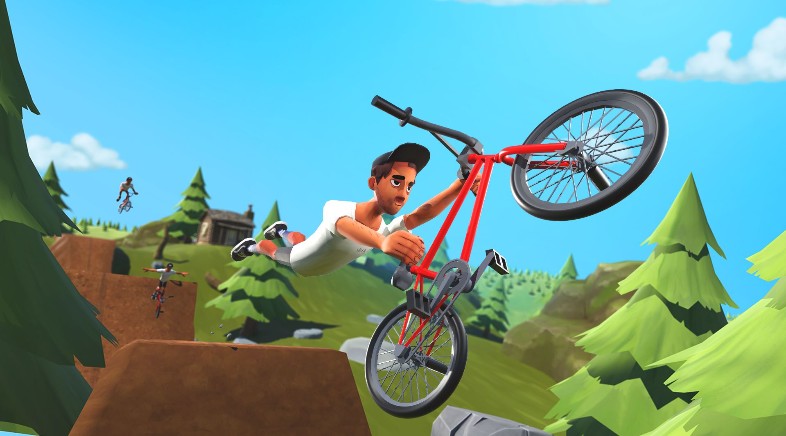
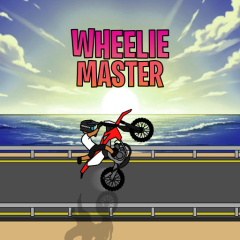
In this game, players will experience a realistic and unique off-road bike riding experience similar to Wheelie Master with the following gameplay mechanics:
When starting Airborne BMX, players are not immediately taken to the main gameplay. The game will sequentially display instructions directly on the screen, helping you understand how to control the bike and handle basic situations.
The instructions are given step-by-step. You need to perform the actions the game requires accurately before moving on to the next step. If you make a mistake, the instructions will require you to repeat until you get it right.
This method of instruction helps beginners quickly grasp the control mechanics instead of having to learn the entire system from scratch. Only after completing all the instructions can you officially begin the game.
One of the notable mechanics of Airborne BMX is that the bike's movement depends heavily on inertia. When climbing a hill, if the bike doesn't have enough speed, the BMX will gradually slow down and slide backward down the slope.
If you don't react quickly enough, the bike will continue to slide down, and the player may lose control, leading to the end of the ride. Therefore, building enough momentum before entering a steep hill is very important.
This mechanism requires the player to observe the terrain ahead and actively maintain speed. A seemingly easy hill to overcome can still lead to failure if approached at too low a speed.
You need to master and use the correct controls for each situation:
The bike moves quite differently depending on the direction of the terrain. When climbing, the rider needs to maintain enough momentum to resist the slope and continue moving forward. If speed is lost, the bike will quickly be pulled backward.
Conversely, when descending, the bike tends to accelerate faster due to inertia. At this point, the issue is no longer how to keep the bike moving, but how to control posture and speed to prepare for the next section of terrain.
The constant change between the two states means that each slope requires the rider to adjust their control. You cannot apply a single control method to the entire race.