Embark on a free-falling descent with the hilarious character in Farting Flight. Enjoy every roll down the mountain and collect as many stars as possible!
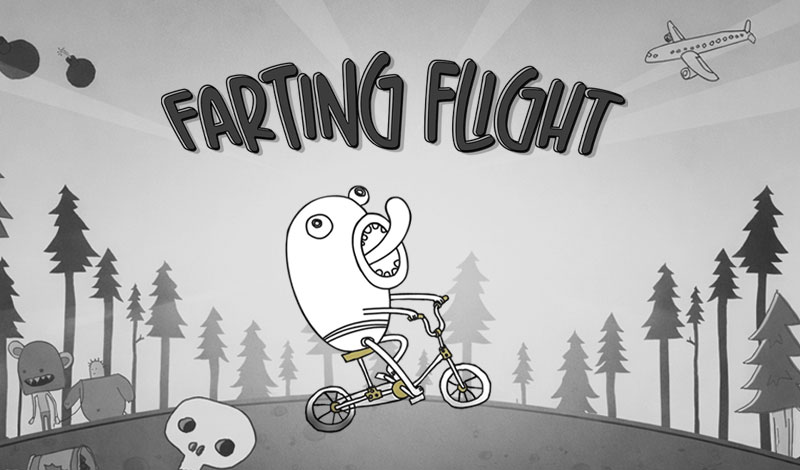
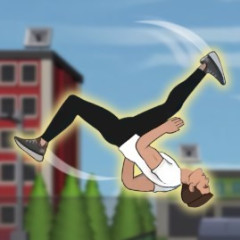
Farting Flight operates on ragdoll physics, where every movement of the character is directly influenced by the terrain, speed, and external impacts. The character doesn't move in a fixed trajectory but will be thrown, bounced, or lose balance depending on the force of the impact in each situation.
When hurtling down a slope or hitting an obstacle, the character's body can:
These movements occur completely naturally according to the game's physics system. The character's flight and landing mechanics are similar to the game Ragdoll Launcher. Even a small change in landing angle or speed can cause the character to fly in a completely different direction.
The terrain in the game also plays a crucial role. Steep slopes, rough surfaces, or obstacles along the way can create strong impacts that cause the character to lose control. This unpredictable physics is what gives Farting Flight its unique character, making each collision or landing full of surprises.
The controls in Farting Flight are quite simple but create extremely chaotic and unpredictable situations:
When the character is riding a bicycle, the player needs to click the mouse repeatedly to increase movement speed. The higher the speed, the stronger the thrust when the character is launched into the air.
When the character is flying in the air, the player can drag the mouse to create more thrust. The character will fly further or change its trajectory while falling. However, controlling the force and timing of the mouse click is crucial, as even a slight mistake can cause the character to lose control and tumble multiple times in the air.
After landing, the character will no longer be directly controlled but will roll, slide, or bounce due to inertia. The direction of movement at this point depends entirely on the terrain, previous speed, and any obstacles on the ground.